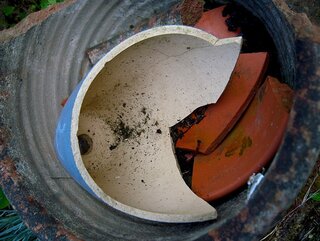
“I am forgotten as a dead man out of mind: I am like a broken vessel.” Psalm31:12.
“The sacrifices of God are a broken spirit: a broken and a contrite heart, O God, thou wilt not despise.” Psalm 51:17
There is a story about a Japanese emperor who had broken his favourite tea bowl. He sent it to China for repairs, but he was disappointed when it was returned just stapled together and looking very ugly. Local craftsmen, however found a solution. They filled the cracks with golden lacquer. It was now the emperor’s favourite bowl, and this was the beginning of a new art form, called Kintsugi, or gold splicing.
This art form honors the article’s history by emphasizing the breaks, rather than hiding them. Often, the gold or silver paints a beautiful picture of something in nature, thus making it more precious than the original.
David knew what it was to be broken in spirit, and He was always crying out to God to mend him and give him victory. He knew that in his own strength he was nothing, but that the Lord was always waiting for him to ask for help. He rose above his faults and failures and accomplished important things for God.
We all come to Jesus in a broken state, and that is the way He wants us to come. There are things in our lives that we regret. It is easy to feel that we are of no value to ourselves or to anyone else. But the Lord looks at the cracks and disfigurement, and He sees the potential for something beautiful. He forgives our past, but He does not completely remove it. With His love and grace, He fills in those broken places and makes us a vessel useful for His service.
Bill and Gloria Gaither expressed this so well in their song “Something Beautiful.” “All I had to offer Him was brokenness and strife. But he made something beautiful of my life.”
This month, I am editing and reposting a series from four years ago, considering stories of broken people in the Scriptures.
Thought For Today: Jesus looks beyond our flaws and imperfections and creates a vessel He can use for His honour and glory.
Devotion by Anne Johnston


2 Comments
Thank you, beautiful, and needed that. God bless you even more for your writings, Sister Johnson.
Thank you, Tina. I felt led to do this series this week. I am glad it was a blessing to you.